The Software Defined Vehicle (SDV): Why are all OEMs transitioning?
The Software-Defined Vehicle (SDV): Why OEMs Are Transitioning
What is a software-defined vehicle? An SDV is a car whose main functions are controlled by software rather than fixed hardware, so the same car can get new features and fixes after you buy it through over-the-air updates. That is the short SDV meaning. The term has been worn out by marketing, but the engineering shift underneath it is real: cars are moving from hardware-first to software-first. This article covers what that means in practice, the difference between the software-last and software-first approaches, the benefits and the genuine challenges, and how Tesla, NIO and others are building it.
Understanding Software Defined Vehicles
A bit of history explains why this matters. Cars were traditionally built software-last: the software came after the hardware was fixed, added on top function by function. Each component had its own electronic control unit (ECU) with its own code, and dozens of them had to talk to each other. That meant difficult integration, complex wiring, and far too many ECUs to manage.
The software-first approach reverses the order. Software is planned from the start, developed in continuous integration and delivery (CI/CD) pipelines so updates ship quickly and reliably. The payoff is fewer ECUs and a much simpler electrical architecture. The next section defines the SDV itself.
What is a Software-Defined Vehicle?
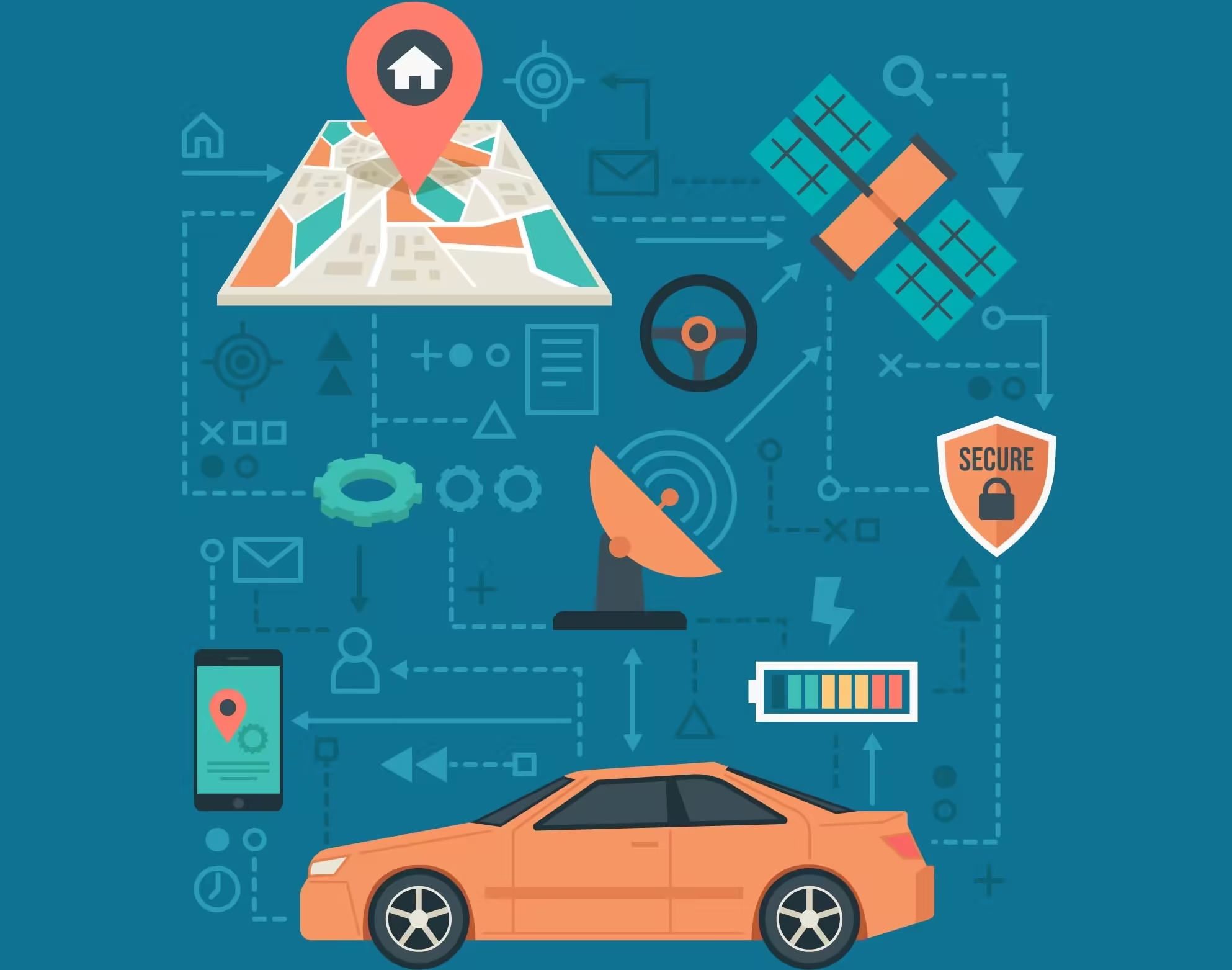
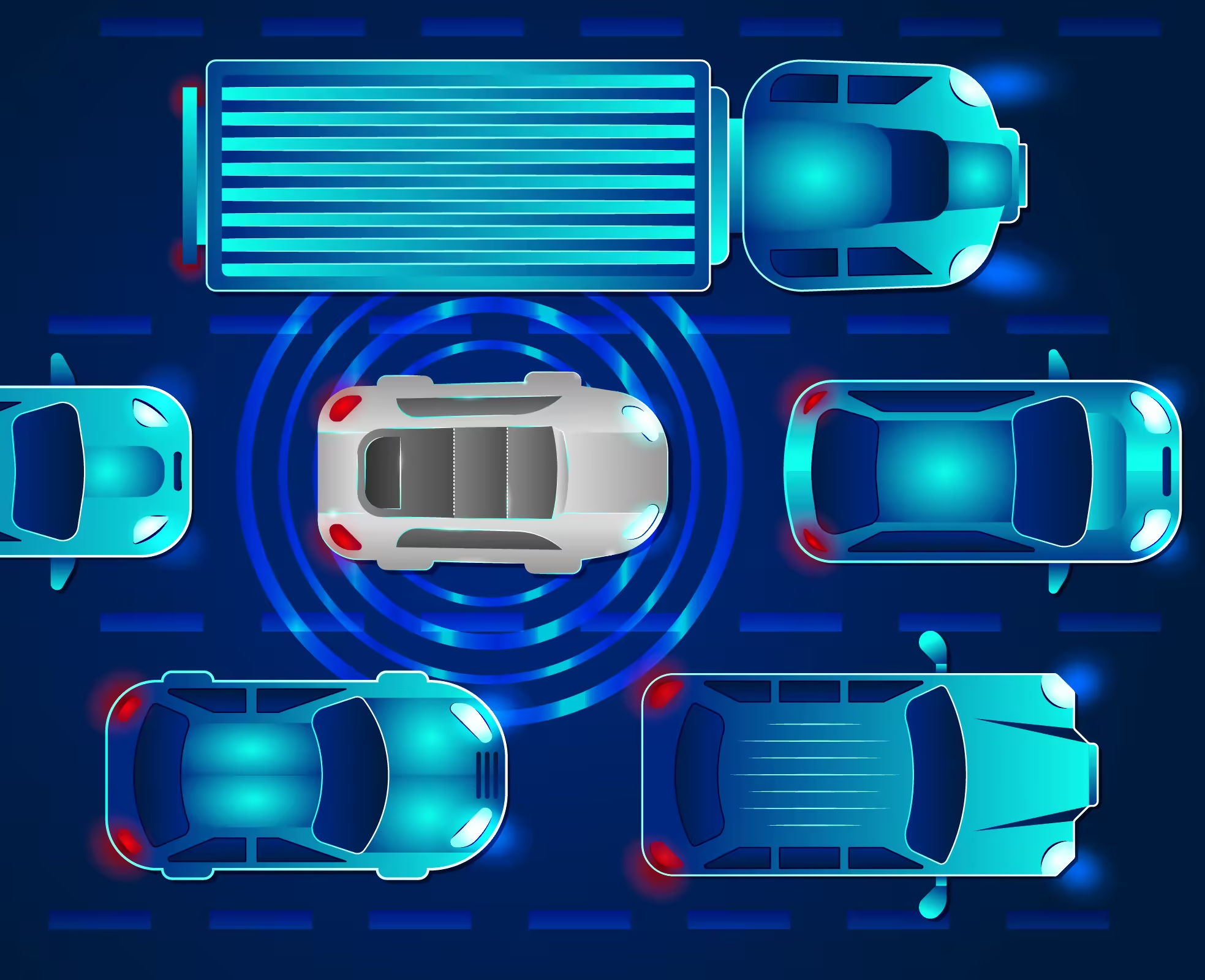
A software-defined vehicle (SDV) is a car where most features are controlled by software rather than fixed hardware. The hardware ships once; the software keeps changing. That lets the carmaker improve the car after sale, push over-the-air updates, and add or unlock functions over time. In practice the car behaves more like a connected computer on wheels than a fixed machine. Tesla is the clearest example of a software-defined vehicle platform built this way from the start, but every major OEM is now moving in the same direction.
What is the Difference Between Software Last and Software First Approaches?
1. Software-last approach
- ECU management: Black-box ECUs running closed binary software from different suppliers. Getting them to work together was hard.
- Complex architecture: The sheer number of ECUs made the system complex and difficult to manage.
- Carry-over parts: Hardware and designs were reused from previous models, which held back new functions.
2. Software-first approach
- Software-grade development: High-quality software built in CI/CD environments, so updates are quick and reliable.
- Simplified architecture: Fewer ECUs and a streamlined E/E architecture.
- Flexibility and speed: Faster to adapt and add functions, which improves the car over its life.
- Software-defined vehicle (SDV): Features are driven mainly by software, so the car keeps improving through updates.
What are the Benefits of Software-Defined Vehicles?
| Benefit | Description |
|---|---|
| Enhanced Software Quality | Continuous integration ensures faster updates and improved software quality. |
| Simplified Architecture | Fewer ECUs reduce complexity, making the vehicle easier to manage and maintain. |
| Increased Flexibility | Vehicles can receive new features and updates faster through OTA updates. |
| Improved Performance | Centralized computing leads to better resource use and enhanced performance. |
How do Software-Defined Vehicles improve performance?
SDVs improve performance by using centralized computing and fewer ECUs, optimizing resource usage and enabling higher levels of automation. This results in better responsiveness and more reliable vehicle operation.
Key Components and Technologies in SDVs
Central Computing Platform
Central to an SDV is the central computing platform. This integrates various vehicle functions and manages communication between different systems, enabling real-time data processing and decision-making, crucial for advanced driver assistance systems (ADAS) and autonomous driving.
Zonal Architecture
A zonal architecture splits the car into a few physical zones, each handled by one zone controller that wires up the components near it and reports to the central computer. This cuts the length and weight of the wiring harness and makes communication between parts of the car more efficient.
Over-the-Air (OTA) Updates and Connected Car Software
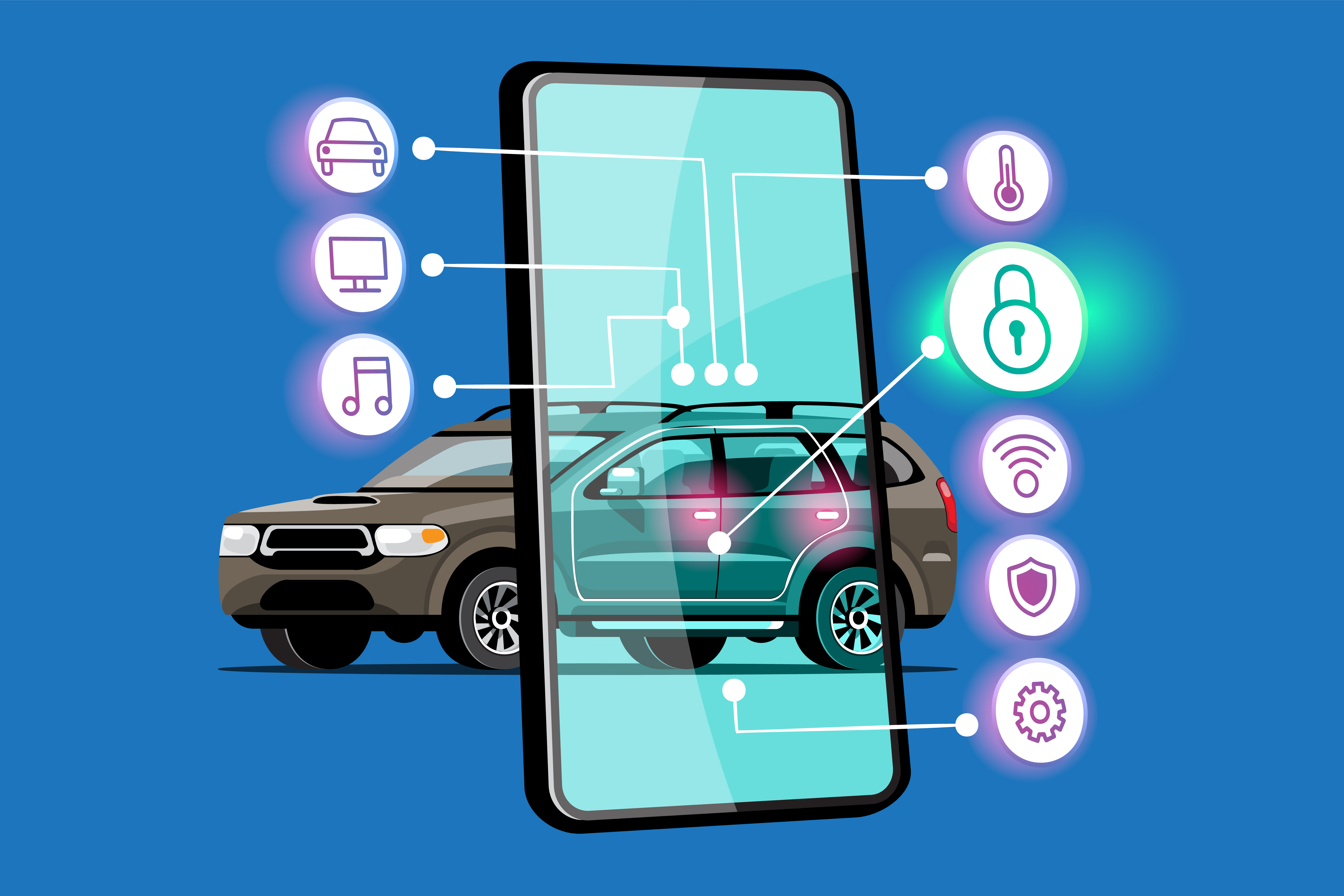
Over-the-air (OTA) updates are a core feature of SDVs, and the area where several established OEMs have lagged Tesla. Manufacturers can push software updates and new features straight to the car, keeping the connected-car software current and closing security gaps without a trip to the dealership.
Advanced Sensor Integration
SDVs rely on data from various sensors, including cameras, LiDAR, and radar. Centralizing sensor data processing allows for more accurate and timely decision-making, enhancing safety and driving capabilities.
Case Studies: Who Is Leading SDV Development
Tesla's Approach: Pioneering the Software Defined Vehicle
- Proprietary Software Ecosystem: Tesla's software stack is built in-house, from the operating system to the user interface, giving the company tight control over vehicle functions. That stack underpins features like Autopilot, Full Self-Driving (FSD) and frequent over-the-air (OTA) updates.
- Centralized Control Unit: At the core of Tesla's SDV strategy is a centralized control unit that consolidates various vehicle functions. Known as the Full Self-Driving Computer, it processes data from numerous sensors (cameras, radar, ultrasonic sensors) to make real-time decisions. This setup reduces complexity and speeds up processing and response times.
- OTA Updates: Tesla's OTA updates are a major advantage. They allow for continuous enhancements in vehicle performance, new features, and improvements to existing functionalities without needing a service center visit. This keeps Tesla cars advanced long after they roll off the assembly line.
- Sensor Integration and Advanced Features: Tesla's suite of sensors provides comprehensive environmental data. Integrating these sensors into the centralized control unit enables advanced features like Autopilot and Full Self-Driving. These features rely on AI and machine learning to navigate complex driving environments safely and efficiently.
- Vertical Integration: Tesla's vertical integration includes software and hardware components like batteries and electric drivetrains. This ensures all vehicle components work smoothly together, optimizing performance and efficiency. By controlling both hardware and software, Tesla can quickly innovate and implement changes across its lineup.
NIO's Customer-Centric Development: Leveraging Data for Continuous Improvement
- Customer Feedback Integration: NIO actively collects feedback through channels like the NIO App and NOMI, an in-car AI assistant. This feedback is essential for pinpointing areas of improvement and understanding user needs. For example, NIO refines NOMI’s functionality based on user interactions, making it more intuitive and responsive.
- Experience Operations Teams: NIO's Experience Operations Teams analyze customer data and turn insights into actionable improvements. These teams work closely with product development to ensure customer feedback directly influences new features. This approach builds a strong sense of community and loyalty among NIO users.
- Vertical Integration and Advanced Software Applications: Like Tesla, NIO emphasizes vertical integration to streamline production and ensure high quality. NIO vehicles feature advanced software applications that enhance the driving experience. Their Battery as a Service (BaaS) model allows users to subscribe to battery packs, enabling flexible upgrades and reducing ownership costs.
- Continuous OTA Updates: NIO uses OTA updates to deliver new features and improvements. These updates enhance everything from the user interface to vehicle performance, ensuring NIO vehicles remain up-to-date with the latest technology.
- Advanced Driver Assistance Systems (ADAS): NIO's sophisticated ADAS use data from a network of sensors, offering features like adaptive cruise control, lane-keeping assist, and automated parking. Integrating these features into a centralized software platform ensures smooth operation and enhances safety.
What are the Challenges of Implementing SDVs?
Infrastructure Development
Building an SDV ecosystem requires significant investment in infrastructure like data centers, high-speed networks, and edge computing. Ensuring widespread 5G coverage is crucial for real-time data processing. Public and private sector collaboration is key to developing this infrastructure efficiently.
Data Security and Privacy
As SDVs become more connected, they generate vast amounts of data, making them targets for cyberattacks. Ensuring strong cybersecurity measures is essential to protect vehicle systems and user data. This includes implementing end-to-end encryption, secure communication protocols, and regular security audits.
Regulatory and Ethical Considerations
The widespread adoption of SDVs raises regulatory and ethical questions. Governments and regulatory bodies must develop comprehensive frameworks to address issues like liability in case of accidents, data privacy, and the ethical implications of autonomous decision-making. Collaboration between industry stakeholders and policymakers is essential to create balanced regulations that promote innovation while ensuring safety and privacy.
The Future of Software Defined Vehicles
The shift to software-defined vehicles is one of the bigger structural changes in how cars are built. As the architecture matures, more of the car's value will sit in software that the maker can update, which keeps a vehicle current for longer instead of freezing it at the point of sale.
Carmakers that get the software-first approach right will move faster than those still wiring up dozens of separate ECUs. Much of the progress will come from working more like a tech company: shorter release cycles, more in-house software, and tighter links between the hardware and the code that runs on it.
EV-Global Verdict: The SDV Is the Future of Connected Car Software
The move to software-defined vehicles is a real change, not just a label. Putting software first, cutting the number of ECUs and centralising compute gives carmakers better performance and the freedom to add features after sale. The open problems, cybersecurity, data privacy and regulation, are solvable but not trivial. Our take: this is the direction the whole industry is heading. Over-the-air updates and a centralised, software-first architecture are becoming the baseline, and the makers that master them will set the pace.
Software-defined vehicles: frequently asked questions
What is a software-defined vehicle?
It is a car whose features and behaviour are controlled mainly by software, which can be updated over the air after you buy it. Like a smartphone, the same hardware can gain new functions over time.
Why are carmakers switching to software-defined vehicles?
Software lets them add features, fix bugs and even sell upgrades after the sale, while simplifying the tangle of electronics inside the car. It also opens up new recurring revenue and faster improvement.
What are over-the-air updates?
They are software updates delivered to the car over the internet, the same way a phone updates. They can improve range, add features or fix issues without a trip to the dealer.